
The Odyssey (2026) Review
What better time for a blockbuster that offers both escapism and critique of men destroying themselves and others with their own hubris?

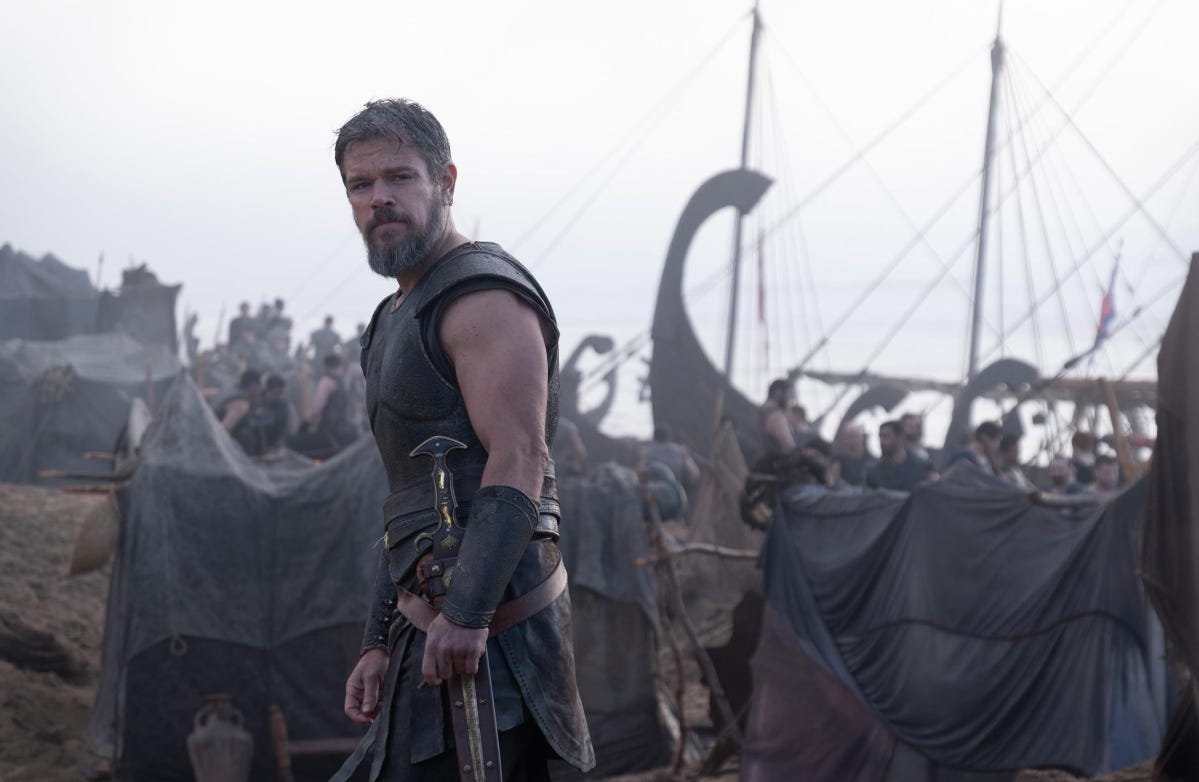
The Odyssey (2026)
Director: Christopher Nolan
Screenwriter: Christopher Nolan
Starring: Matt Damon, Tom Holland, Anne Hathaway, Robert Pattinson, John Leguizamo, Samantha Morton, Charlize Theron, Zendaya, Jon Bernthal, Benny Safdie, Lupita Nyong’o, Himesh Patel, Elliot Page, Cory Hawkins
by Sam Sewell-Peterson
“A face... a fleet... a war... a man... a thought... a trick... a trick to break the walls of Troy... and burn it screaming to the ground!”
A re-telling of the original epic, told in a non-linear fashion on a scale that only IMAX screens can do real justice? It has to be Christopher Nolan’s The Odyssey. Three years after Oppenheimer won him his Oscars and wrote him a blank cheque in Hollywood, he’s finally succeeded in his quest of brining to life a story that has been on his mind for decades.
In a time of of gods, monsters and magic, humanity was still as flawed as ever. After the bloody conclusion of the ten year Trojan War, celebrated General Odysseus (Matt Damon) and his men set sail home to Ithaca and are beset by obstacles, trials and the wrath of the gods until they are hopelessly lost and barely clinging on to life. Meanwhile on his island kingdom, a throng of suitors for Queen Penelope (Anne Hathaway) have occupied her palace and young Prince Telemachus (Tom Holland) has little authority to maintain peace in the absence of his presumed-dead father.
If you look back to something like Troy, which Nolan came close to directing back in 2004 (he did Batman Begins instead), what’s most disheartening is that it cost almost $200 million to make the most po-paced, simplistic and dull version of Greek mythology imaginable. The Iliad has gods striding around battlefields, shape-shifting and lobbing fireballs to turn the tide of battles between thousands on a whim, but the filmmakers didn’t want to show audiences sights such as these lest it be branded “silly” or not enough like Gladiator. In his take on The Odyssey (and a bit of The Iliad) Nolan manages to have his cake and eat it too, by including both temperamental deities and a grounded, consistent logic to everything.
“Why can’t gods speak in ways we understand?” / “Who doesn’t understand thunder?”
The male Olympian gods here are unseen, terrifying elemental antagonists whereas the female gods, while still enigmatic and deceitful, do at least deign to appear to mortal men (as apparitions from their guilt or delirium, it is strongly implied) and provide guidance if the mood takes them. While most rightly fear the gods and will do almost anything, from prayer to child sacrifice to placate them, Odysseus and to a lesser extent Penelope and Telemachus take their fates in their own hands and dare the Olympian pantheon to try and stop them.
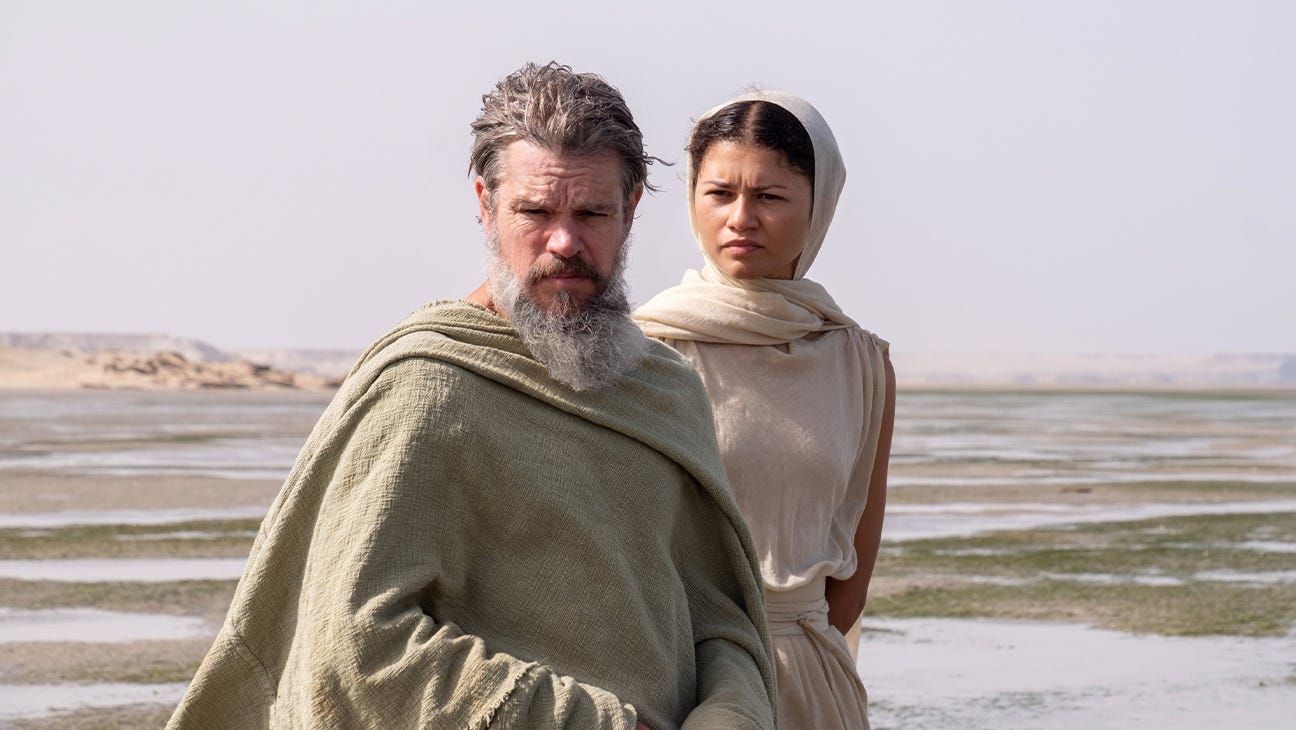
The idea here is to bring mythology to life while remaining as tactile and hard-hitting as possible, and it is in pulling off this balancing act that Nolan truly shows his mastery of the form. All of Odysseus’ colourful adventures you either know by heart or half-remember from childhood are here, and they’re as heart-pumping and violent and darkly ironic as you could hope for. His confrontation with the sheep-herding Cyclops in his cave is a tense mini-monster movie with a hint of melancholy. The chapter where Odysseus’ crew get bewitched and re-moulded into pigs by a resentful witch is up there with the most flesh-crawling horror of the last decade. Their visit to the volcanic planes of Hades to commune with shades only given a voice by slurping a handful of blood is eerie, poignant, and playfully references Ray Harryhausen’s work on Jason and the Argonauts.
As befits an epic story, this is a true ensemble. Matt Damon has an easy charisma that would make men follow him to the ends of the Earth while also conveying Odysseus’ repressed trauma and the crippling regret eating away at his very soul. Anne Hathaway and Tom Holland excel at showing the pain of not knowing if a loved one is alive or dead while trying to keep the likes of Robert Pattinson’s reptilian schemer Antinous at bay. A never-better John Leguizamo is the beating heart of the picture as blunt and near-blind Odysseus loyalist Eumaeus, while Zendaya, Elliot Page and particularly Samantha Morton are hypnotic in small but crucial roles.
Nolan presents some of these characters how exactly how you’d expect them to be (Odysseus is brave but arrogant, Penelope crafty and resilient), while others have been creatively reimagined. Notably, Agamemnon (Benny Safdie) covers up his vulnerabilities with an imposing black suit of armour and stomps around the battlefield like a Mycenaean Darth Vader. Lupita Nyong’o portrays not just Helen of Troy but her sister Clytemnestra, in this version her twin, which results in the amusing idea that the Narcissistic king brothers Agamemnon and Menelaus (Jon Bernthal) both had to be married to the most beautiful woman in the world.
Never one to phone it in, following his rich and layered work on the likes of Black Panther and Sinners, Ludwig Goransson has gone the extra mile to craft the Bronze Age soundscape for this one. Not so much a musical score as an experimental, rumbling, discordant accompaniment to events provided by Goransson’s replicas of instruments that don’t exist anymore. The sheer scale of the film and Nolan’s passionate commitment to practical execution wherever possible have resulted in the entire production going the extra mile in recreating a pseudo-historical era, to find the most stunning locations worldwide and to manufacture towering sets, fully-functioning ships, and lived-in costumes and armour that will stand up to the scrutiny of IMAX cameras and the unparallelled level of detail they capture.
This is a story all about trauma and regret and the burden of living up to your own legend, but also about being part of a world where so much is still unknown, unexplored, and unexplained. Literal monsters exist, but they just stand in for perceived dangers of strange and distant lands, a literalisation of our fear of what we don’t understand. The fall of Troy (shown in PTSD-laden flashbacks interspersed throughout the film) is the once-in-a-generation trauma still being processed by both Odysseus, his men and the families back home still mourning what the war has robbed them of.
“Don’t look for gods in men; you’ll always be disappointed.”
Nolan hasn’t really addressed previous criticisms of his work; the sound mix while punchy occasionally overwhelms the dialogue, and the ensemble casting inevitably results in some great performers having mere minutes of screentime. It can also take a few scenes, the early exposition-heavy, establishing-who-everyone-is ones, to get your ear in on this sort of material being delivered in American accents even by the Brits in the cast (that’s not to say all the Sword and Sandals films of the 50s and 60s when everyone was speaking with Received Pronunciation made any more sense).
The Odyssey remains a truly timeless story about storytelling with echoes that still reverberate today. What better time for a blockbuster that offers both fantasy escapism and critique of men destroying themselves and others with their own hubris? Christopher Nolan has become a filmmaking household name, a mark of quality and gripping, genuinely big screen event cinema. Nobody else should probably be allowed to call their work an epic for a while after this. The Odyssey was going to be one of the biggest films of the year even without the critical acclaim it has thus far been lavished with. Let me add another voice to the chorus pleading with you to see this as big, loud, and as soon as you can.
9/10
Watch and Listen to Second Cut on YouTube
Follow Us @secondcutpod
Follow the Author @SSPThinksFilm
Our Old Work at The Film Magazine
Great review Sam - hope to see again on IMAX!