
Highest 2 Lowest (2025) Review
This is undoubtedly Washington’s movie and a welcome reminder after a two decade hiatus why he and Lee make for such a killer team.

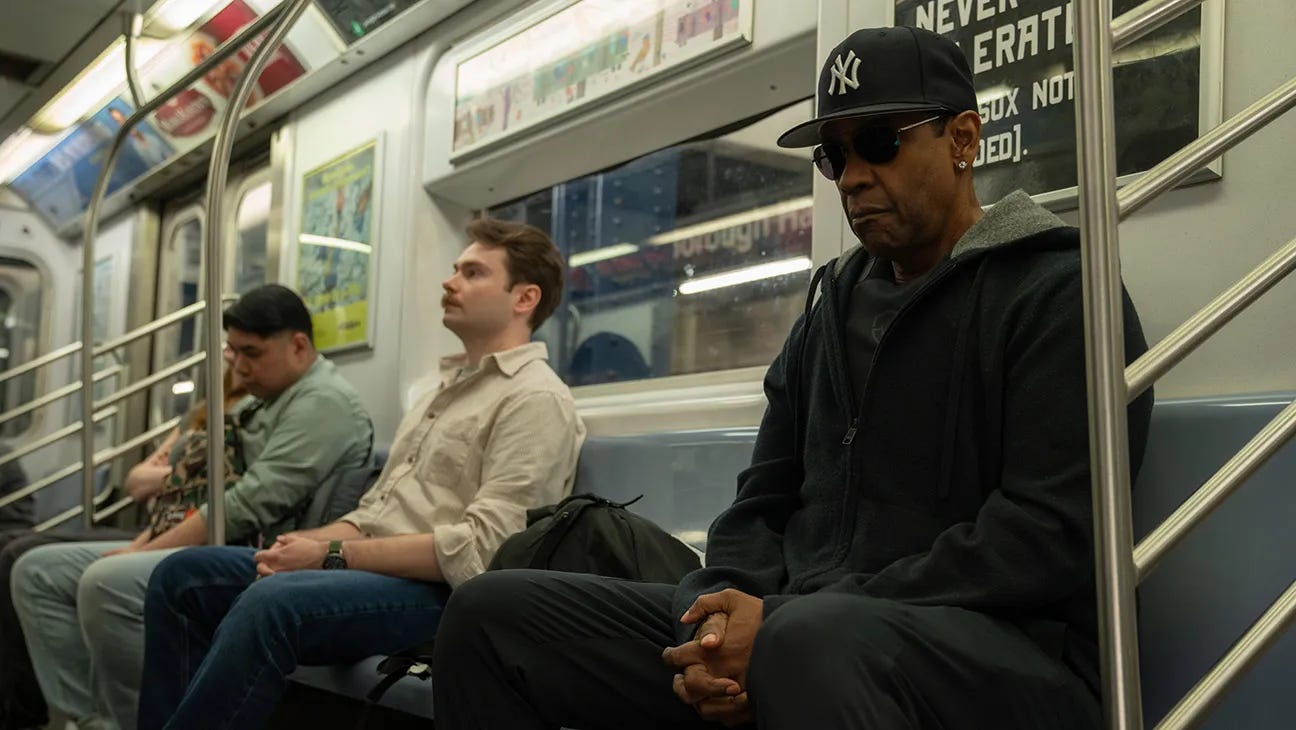
Highest 2 Lowest (2025)
Director: Spike Lee
Screenwriter: Alan Fox, Akira Kurosawa (based on film by)
Starring: Denzel Washington, Jeffrey Wright, Ilfenesh Hadera, ASAP Rocky, John Douglas Thompson, Dean Winters, LaChanze, Aubrey Joseph, Michael Potts, Wendell Pierce
by Sam Sewell-Peterson
Spike Lee remaking a classic of East Asian cinema isn’t always a slam dunk. His 2013 take on Park Chan-wook’s Oldboy was a misguided affair, to put it mildly, but perhaps it just wasn’t a good fit. Akira Kurosawa’s 1963 film High and Low has attracted a legion of new fans in recent years, not the least of which is Bong Joon-ho who cited it as a key influence on his Oscar-winning Parasite. So what new angles can Spike Lee bring to a groundbreaking eat-the-rich kidnapping thriller with most of the same dramatic beats by transposing it to modern New York and its music industry?
Highest 2 Lowest opens with “Oh, What a Beautiful Mornin’” from Oklahoma! against sweeping aerial shots of the New York skyline with prominence given to the Brooklyn Bridge. When the camera settles on a modernist penthouse with the perfect view of the city, we begin to follow David King (Denzel Washington), a superstar record producer on the verge of buying back ownership of his struggling company Stackn’ Hits and revitalising their artistic output. But after a case of mistaken identity at a basketball camp involving a distinctive headband, the son of David’s driver is kidnapped instead of his own son by mistake and held for a $17 million ransom. Soon, David is forced to choose between his career and doing what is right.
David King, when it comes down to it, is a better man than Kingo Gondo of High and Low. He’s far from father of the year, but he’s affectionate towards his family when work doesn’t get in the way, as well as being a driven artist, supportive of employees and anyone looking for their big break, and with a good taste in suits paired with sneakers. Washington’s character is also much more of a man of action than Mifune’s was, the latter disappearing for a good stretch of the Kurosawa film and perspective shifting to that of the detectives, whereas David ends up taking matters into his own hands and conducting his own investigation when the police enquiries don’t achieve results quickly enough.
Being in every scene, this is undoubtedly Washington’s movie and a welcome reminder after a two decade hiatus why he and Lee make for such a killer team in films like Malcolm X. David is a flawed and fascinating individual to build a sizeable moral dilemma around, but Jeffrey Wright and ASAP Rocky also stand out as, respectively, David’s reformed former criminal driver Paul and his resentful tormentor. Unlike in the Kurosawa film, King’s family are also given more to do, Ilfenesh Hadera’s Pam King and Aubrey Joseph’s Trey getting to deliver two perfectly-placed lines to give David a wakeup call just when he needs it: “As your loving, silent partner, I will no longer be silent” and “David King, my father. The man with the best ears in the business, but the coldest heart”.
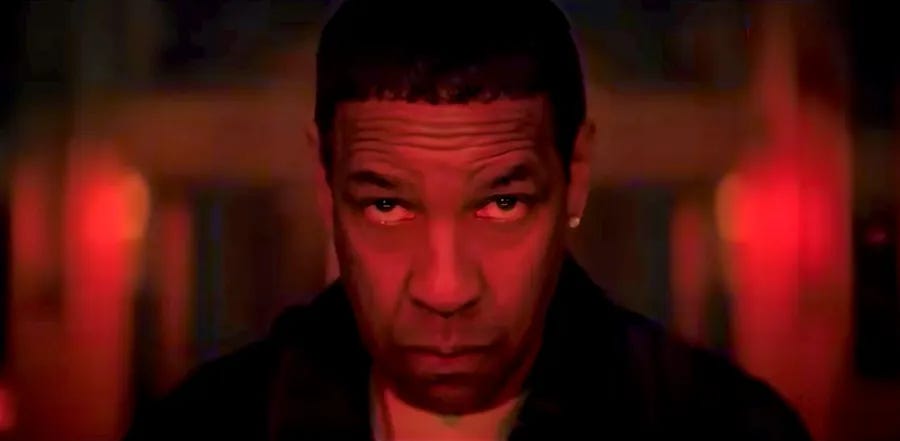
By Lee’s usual standards, this is a relatively stylistically restrained affair, even if he did manage to get his own version of the Kurosawa wipe edit in his film. As part of the money handoff sequence we navigate through a Puerto Rican street festival which recalls Lee’s documentary filmmaking stylings but for the most part he avoids distracting from the emotion of the performances. In the final act though, where everything goes into overdrive you can see the slick, tension-ratcheting Spike who made Inside Man breaking through.
“What are people gonna say when you sacrifice Paul’s kid to buy Stackn’ Hits back?”
Aside from this version of the story taking place against the backdrop of a very different industry, there are many references to how contemporary society responds to the rich going through hardship, how they are insulated to an extent and never as impacted as the average person on the street. The perpetually online Trey doom scrolls through posts about a nepo baby conspiracy being behind his less well-off friend being kidnapped instead of him. The ransom money handoff by train plays out a little differently as well, arguably too slickly to have taken place in city as packed as New York.
Technological developments also necessitate some changes in the narrative, ever-present mobile phones and the possibility of relatively easy location tracking lowering some of the hurdles of the original story.
The film notably spotlights both established and upcoming musicians in and amongst its thriller elements, real creativity vs inferior technologically-assisted shortcuts becoming an important additional theme. This is best demonstrated by David’s almost uncanny ability to pick out a distinct sound which eventually gets him out ahead of the technologically-reliant police investigation towards the end of the film “I don’t need A.I. to tell me what I already know”.
The original High and Low ends with a confrontation that was cut down by Kurosawa to its bare bones for maximum impact. Lee goes the other way with Highest 2 Lowest with an elaborate, flashy finale featuring a rap battle, a train chase and a fist fight. Arguably this final act loses some focus and becomes overwhelming in the amount of visual and musical information being thrown at you (Howard Drossin’s breathless, jazzy score leaving you reeling when paired with the high-octane action) but it also includes some of the most memorable moments of the entire movie and the best work from Washington and ASAP Rocky so it’s difficult to see how it could have been streamlined.
Not everyone could follow on from Akira Kurosawa and not have it feel like a fool’s errand. Highest 2 Lowest is Spike Lee on top form, bringing new relevance to an old story with power, style and attitude enough to make you hope we’re still due a few more collaborations between Lee and Washington yet.
Score: 8/10
Watch and Listen to Second Cut on YouTube
Follow Us @secondcutpod
Follow the Author @SSPThinksFilm
Our Old Work at The Film Magazine
I'm delighted to reas that Spike Lee brought some of the current art space into the movie and that it was a thrill to see Washington.