
Hamnet (2025) Review
Hamnet has such an intoxicating mixture of styles, being simultaneously gritty and grounded, spiritual and dreamlike.

Hamnet (2025)
Director: Chloé Zhao
Screenwriters: Maggie O’Farrell, Chloé Zhao
Starring: Jessie Buckley, Paul Mescal, Emily Watson, Joe Alwyn, Jacobi Jupe, Olivia Lynes, Bodhi Rae Breathnach, Justine Mitchell, David Wilmot, Noah Jupe
by Sam Sewell-Peterson
Five years ago, Chloé Zhao became the second woman to win the Academy Award for Best Director. The decidedly less successful, if still wildly ambitious Marvel film Eternals followed, but just about everybody was crying out for Zhao to return to her more modest indie roots. She is now in the awards conversation once more, having already succeeded at the Golden Globes, with the heartbreaking Shakespearean drama Hamnet.
Based on Maggie O’Farrell’s 2020 novel (which O’Farrell adapts for the screen with Zhao), we follow Agnes and William Shakespeare (Jessie Buckley and Paul Mescal) who after quickly falling in love and having three children encounter relationship hurdles as Will tries to break through as a playwright in London and increasingly neglects his young family in Stratford. But when they suffer the worst tragedy imaginable - the untimely death of their son Hamnet (Jacobi Jupe) at the age of 11 - Agnes and Will process their grief very differently.
Agnes and Will are introduced to us and framed as coming from completely different worlds, the former a strange spirit freely wandering the woods, flying her hawk and letting the experience of being one with nature wash over her, while the latter, still bearing the scars of physical abuse, peers sadly through a grimy window, dreaming of his own artistic liberation. The pair make an instant, passionate connection, their chemistry and longing for each other palpable from their very first meeting, much to the consternation of their parents.
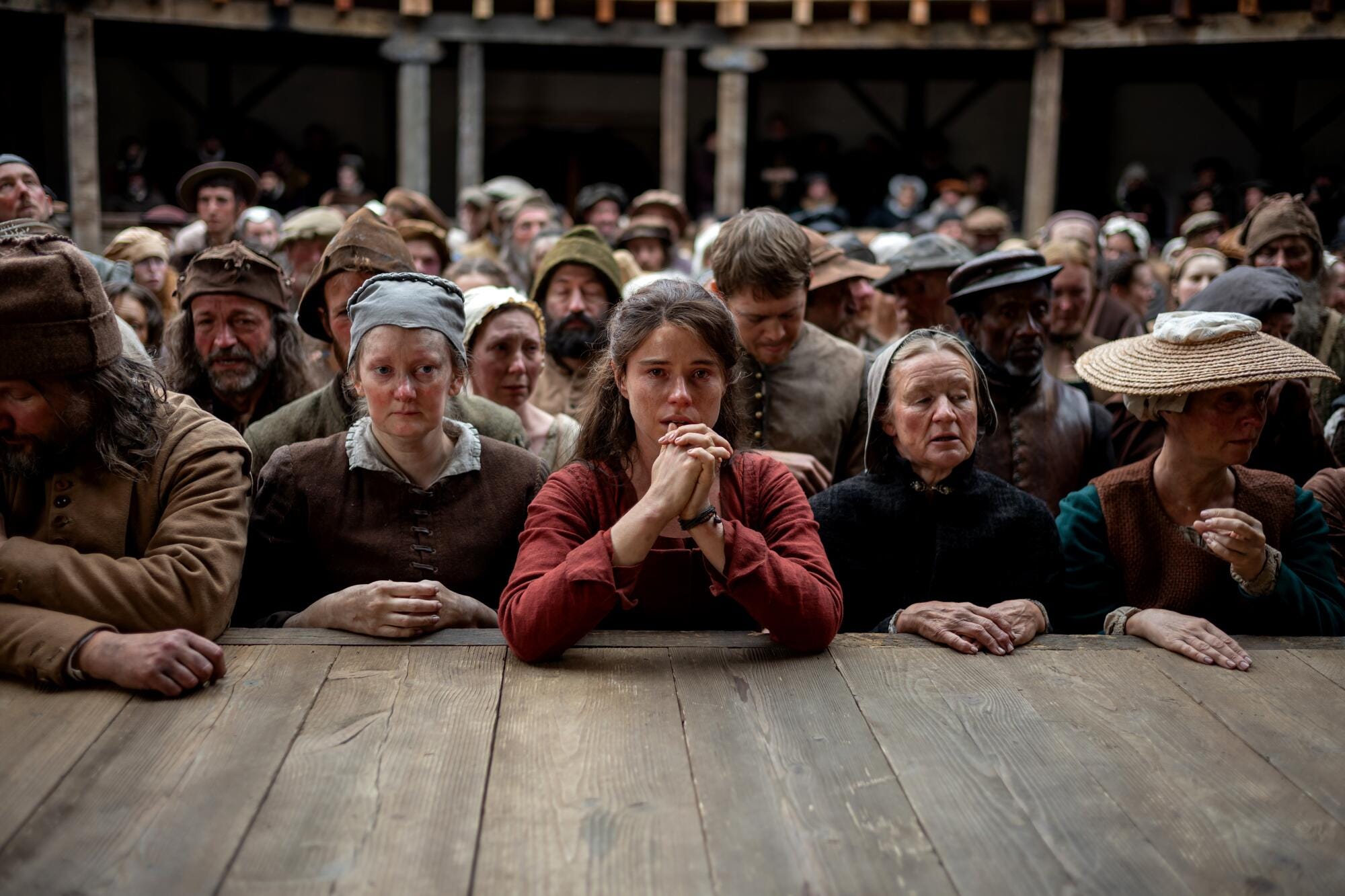
Mescal does some good work, but because Will disappears periodically from the narrative to “become Shakespeare” and Agnes is always on screen, this is without a doubt Jessie Buckley’s show. Not only do never really leave Agnes’s side, but the camera seldom leaves her face, shown in unforgiving, grief-stricken close-up as she goes through living hell. Perhaps the most upsetting scene to sit through is a prolonged and traumatic labour when she is having twins (in the family home as a storm brings flood water under their door), but there is scarcely a passage in this where Buckley won’t destroy you with a subtle change in her hugely expressive face or an explosive outburst at the cruel injustice dealt to her and her family.
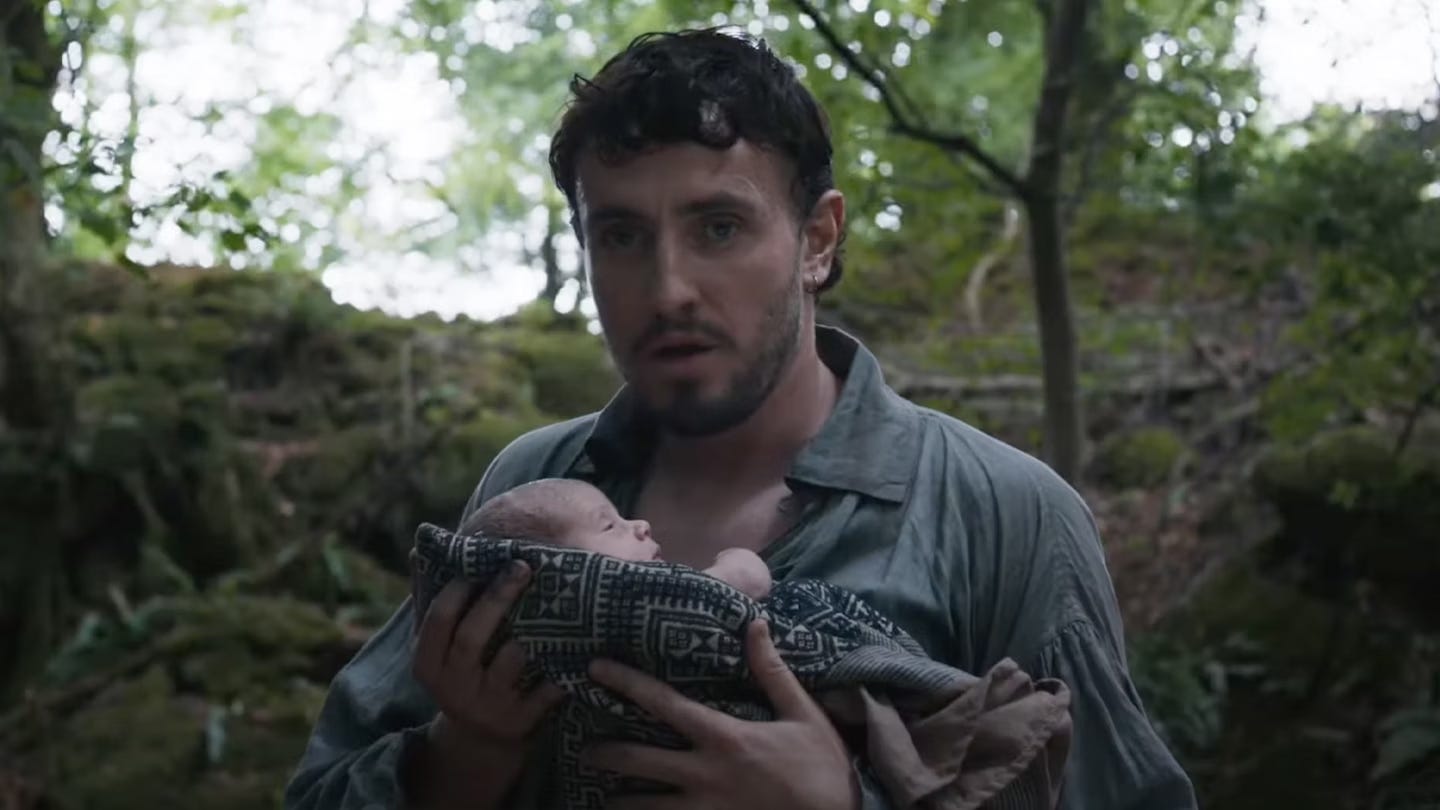
Zhao’s films are always inextricably tied to nature, our relationship with it and our understanding of it. Songs My Brothers Taught Me, The Rider and Nomadland are all in conversation with the natural world and how we relate to it as a species. This film closely examines the role of the village herbalist, wise woman and midwife; key members of medieval and Renaissance society that were nonetheless often regarded with fear and suspicion or branded as witches because they knew more than most men and seemed to hold a certain power over death through their knowledge of the land, foraging and medicinal treatments passed down from mother to daughter over generations.
Hamnet has such an intoxicating mixture of styles, being simultaneously gritty and grounded, spiritual and dreamlike. Everyone’s hair is unkempt, their teeth and nails grimy, the moss and the soil of the woodland felt with every step. But then you have the black abyss of the hole in the ground in the woods that seems to herald death, the omens of what is to come in the characters’ futures, the muted colours of an afterlife glimpsed through gauze fabric. This juxtaposition roots us in this unforgiving era of history in the most tactile way imaginable while emphasising through some ambiguous visual symbolism how much of our existence we will never fully comprehend.
It’s all about how grief affects everyone very differently and how everyone has their own way of processing the worst moments of their life, often to the detriment of their loved ones. Agnes is living it; she was there as her son’s life left him, but Will missed it and is repressing through his daily life and only able to express his feelings through his art.
It has long been theorised by scholars that Shakespeare was processing something when writing Hamlet, that his pain directly inspired one of his great works, a tale of regret, guilt and fathers and sons. The casting of real brothers here is a stroke of genius, a highly emotional meta-textual boost the story on screen. Young Jacobi Jupe plays Hamnet as a cheery and imaginative child inseparable from his twin sister, while the elder Noah Jupe (A Quiet Place) performs as the on-stage Hamlet in the film’s final act and is tasked with embodying the the man Agnes and Will’s real son would never become and with finally prompting their wordless understanding of each other’s lived experiences.
If the raw performances and the traumatic events of the story don’t get you, then Max Richter’s score might just push you over the edge. There is a moment in the final sequence on stage that, while a massively emotional crescendo, wasn’t quite going to bring on tears, but then an image of hands touching coupled with Richter’s music swelling caused the dam to break.
Hamnet is not an easy watch, in fact it can be a bit of a trial for the soul. There are nitpicks for history nerds and if you know the real story from Shakespeare’s biography then there’s not much in the plot to surprise you. But Zhao has still delivered another powerful humanist tale that perhaps comes the closest of any recent film to truly understanding our relationship with love, death and our brief time on this planet. The raw performances, the seamless portrayal of a harsh historical world and the sheer force of the emotions on show makes for something powerful and lasting.
8.5/10
Watch and Listen to Second Cut on YouTube
Follow Us @secondcutpod
Follow the Author @SSPThinksFilm
Our Old Work at The Film Magazine
I've been wondering about this one. Surprisingly it reads somewhat cliched.
Jessie Buckley, though. I've always liked her... and her work. Watch her in anything.