
Far From Endgame: What's Wrong With the MCU
Jacob takes an industrial and general audience perspective on the current state of the MCU.

by Jacob Davis
There’s no question Marvel has struggled cinematically since Avengers: Endgame’s 2019 release. Aside from Guardians of the Galaxy 3 and Deadpool & Wolverine, profits have plummeted since the beginning of Phase Five in 2023. This piece looks at the industrial issues Marvel has faced in the 2020s, and takes the perspective of a general audience member—I have personally only seen a few of the MCU’s 15 movies since Endgame, and, in hindsight, regret spending time on most of them.
It would be impossible for someone in 2019 to imagine Disney fumbling the property at all. Infinity War was a wildly entertaining film that ended on a meaningful cliffhanger, and it was paid off with a satisfying conclusion in Endgame, the culmination of over a decade of storytelling on an unprecedented scale. Spider-Man: Far From Home was a coda to the Infinity Saga, and set the stage for Peter Parker’s development as he became more of a key figure for the MCU in a world without the beloved Tony Stark and Steve Rogers. Disney+ launched in November of 2019, and there were already plans in place for new “TV” content to go directly to the platform the following year.
And then COVID happened. Disney couldn’t have foreseen the entire entertainment industry essentially coming to a pause. Black Widow’s already belated film was pushed to 2021 (with a simultaneous theatrical and streaming release), Eternals wrapped filming just before the pandemic reached the USA, and the filming of Shang-Chi and Spider-Man: No Way Home was delayed until COVID protocols were put in place. After over a year of no MCU, these four films (which comprised 4/7 of Phase Four’s theatrical output) were released in a six-month span in 2021 to varying levels of financial and critical success. Things seemed to be getting back on track to some extent.
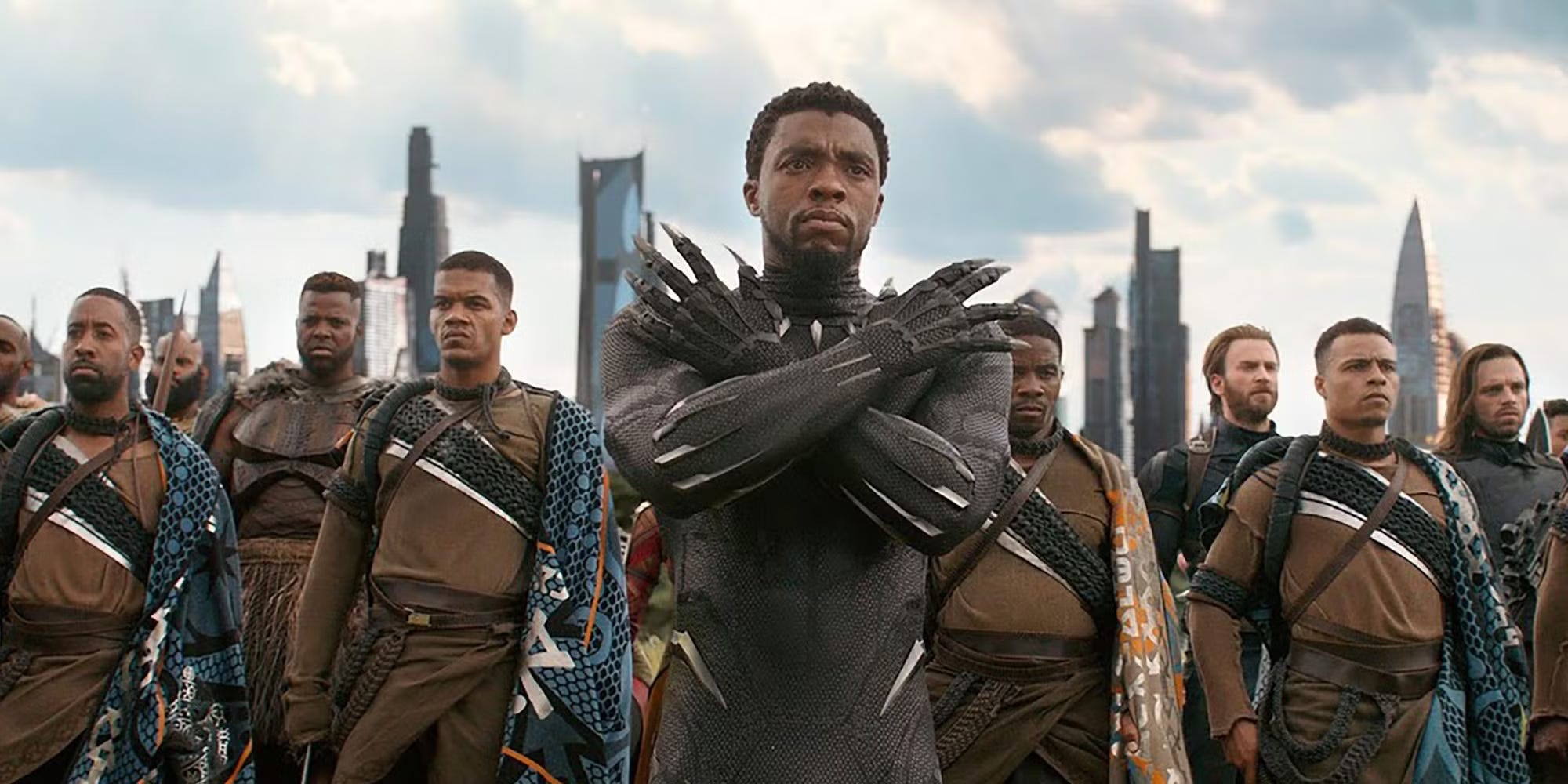
2020 also saw the tragic passing of Chadwick Boseman. Boseman had been diagnosed with colon cancer in 2016, and he continued to make movies while undergoing treatment. Boseman was fortunately able to keep his private life private, and I cannot say to what extent they knew about the severity of his condition (Coogler has stated he was unaware of Boseman’s illness), but fans certainly assumed he would be a key feature of the next era of the MCU. T’Challa was the King of the world’s most technologically advanced nation, but was also a soft-spoken and thoughtful leader who could have become a defacto head of the Avengers.
This led to changes in 2022’s Black Panther: Wakanda Forever, as T’Challa’s sister Shuri donned the mantle of Black Panther (amidst public discourse on actress Letitia Wright’s vaccine stance). Shuri, a Peter Parker like character played for the role of comic relief rather than protagonist, was suddenly thrust into a role that was quite literally not made for her. 2022 also saw the long-awaited (and massively disappointing) releases of Taika Waititi’s Thor: Love and Thunder, and Sam Raimi’s Doctor Strange in the Multiverse of Madness. The latter (which was actually released first among these three films) gave the impression that maybe the MCU was really back on track after Endgame and COVID, especially when Disney labeled Phases Four, Five, and Six the “Multiverse Saga” at 2022’s San Diego Comic-Con. Wakanda Forever marked the end of Phase Four, which also included seven seasons of Disney+ shows (not counting What If…) released from January 2021 to October 2022.
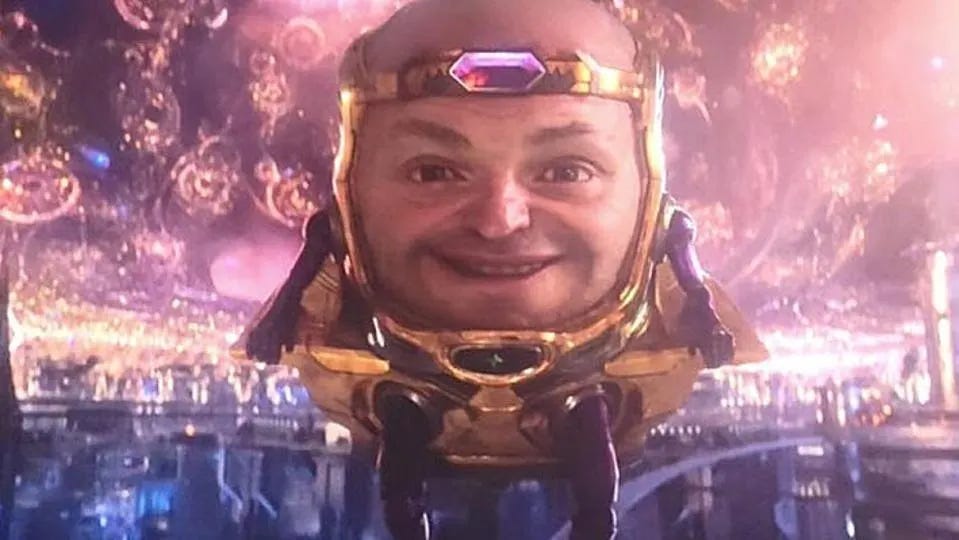
Phase Five began in 2023 with Ant-Man and the Wasp: Quantumania. The movie featured Jonathan Majors as Kang, a multiverse- and time-traversing villain who was set up to become the new main antagonist for the Avengers. What his plan was for whatever his Avengers movie(s) would be, I couldn’t tell you, and it doesn’t matter—only a month after the film’s release, Majors was arrested for assaulting his former girlfriend, and he was found guilty of 3rd degree assault and harassment in December of 2023. Marvel claimed that they didn’t think Kang was good enough as a villain even before Quantumania flopped and Majors was arrested [insert “Sure, Jan” gif here], and pivoted to the Doomsday story (desperately starring Robert Downey Jr. as Doctor Doom) that will debut next year.
2023’s other films were James Gunn’s Guardians of the Galaxy Vol. 3, a farewell to the ragtag team of unexpected heroes, and The Marvels, which was mired in the worst discourse imaginable online while also being too uninteresting to merit the attention. Meanwhile, Marvel was once again interrupted by strikes from the Writers Guild of America and SAG-AFTRA that lasted from May to November of 2023, completely halting writing and filming of upcoming movies. 2024’s Deadpool & Wolverine was barely finished in time to be the sole 2024 MCU release, while Captain America: Brave New World and Thunderbolts* were pushed to 2025. D&W revels in the absurdity of a Marvel multiverse, and is truly the only worthwhile thing to come out of the concept as presented by the MCU (though Sam might argue otherwise). Brave New World and Thunderbolts* (or The New Avengers) completed Phase Five (which has nine seasons of streaming shows; don’t ask me how many of them matter) before Phase Six was officially launched with The Fantastic Four: First Steps in July 2025. Maybe the MCU is finally back on track now, though you couldn’t tell from 2025’s box office returns.
While there were many factors outside of Disney’s control, there are clear reasons why audiences aren’t flocking to MCU movies anymore. The first is that Endgame felt like an ending. Some people simply no longer cared about the franchise(s) once Tony Stark and Steve Rogers left. Rather than using the multiverse to bring them back with new, younger actors, Disney made Falcon, Steve’s uninteresting sidekick, Captain America, and ignored the fact that just about anyone can put on an Iron Man suit. There’s almost no remnant of the original MCU in the post-Endgame films while Disney throws characters at the wall to see who sticks.
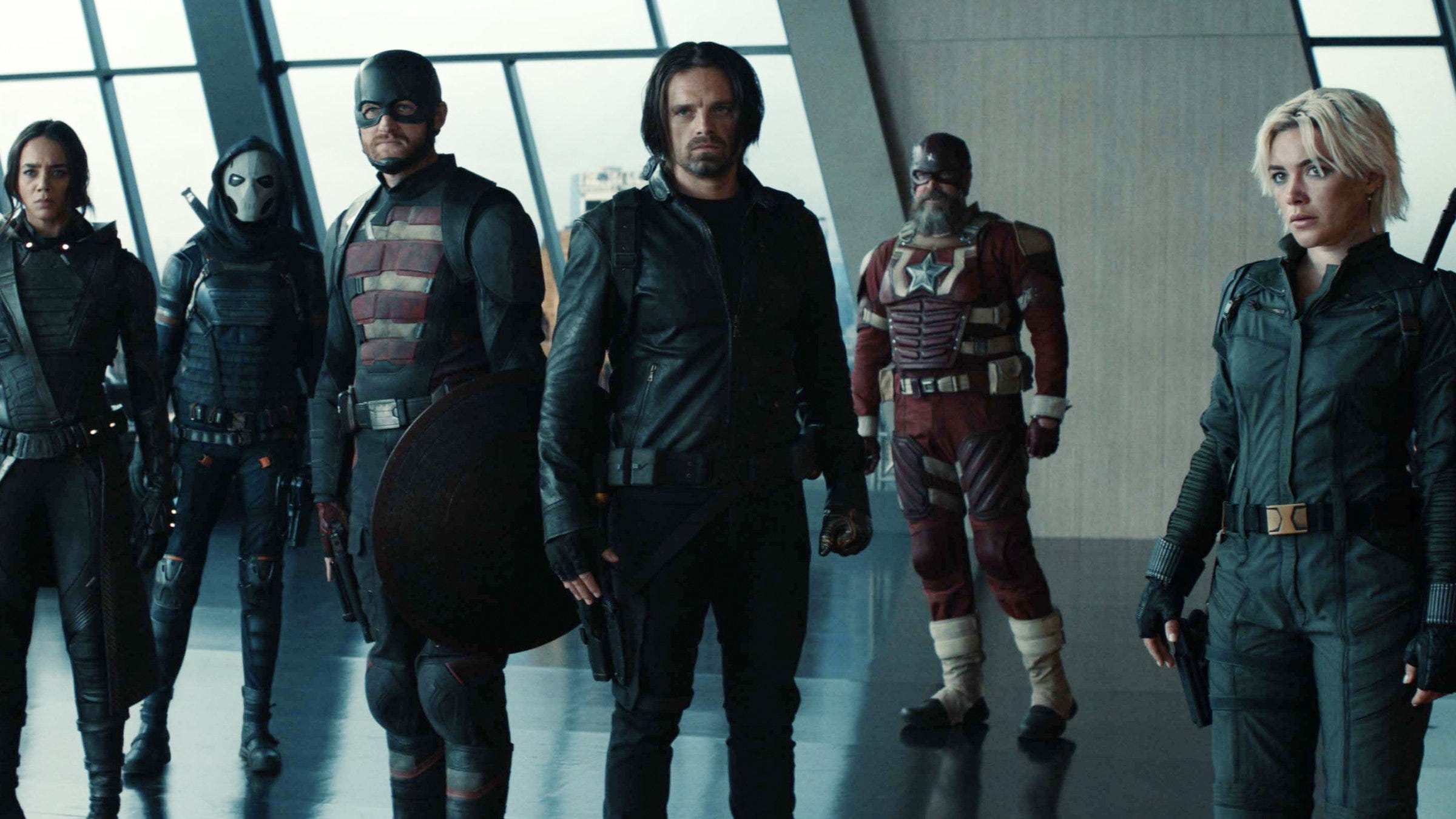
Another issue is the “homework” that is implicitly required for viewers to understand what’s happening. Not counting new fans who would have to watch from Iron Man to Endgame before getting into the current state of the MCU, the number of streaming shows and films to watch (some of which seemingly don’t matter now) is intimidating. Going through the list of MCU shows, it’s difficult to tell what matters and what can be skipped (I’m pretty sure What If… is inconsequential, but I could be wrong). Perhaps this is by design—maybe the theory was that audiences would be driven by the fear of missing out, determined to understand everything happening with the movies. Instead, folks like me have decided to ignore the shows and miss out on the movies because of the oversaturation that has yet to build to anything of note. Even when someone (Sam) tells me Thunderbolts* is good, and I can see they’re in the Doomsday cast list… I don’t care. Maybe I’ll eventually watch it on Disney+, but I have no desire to. Their outfits are drab, I didn’t like Black Widow, haven’t watched any of Bucky’s post-Endgame media, they seem like D-Tier heroes without the visual flair of Guardians’ cosmos… and I’m supposed to care about these characters now?
However the worst issue with the current MCU is it’s unclear what they were ever building to. Phase One was so tight and focused—Iron Man ended with the Avengers tease, and the proceeding films gave the origins of the other three Avengers along with Iron Man 2, culminating in The Avengers. The Phase Two films developed The Avengers further, and gradually built towards the Infinity Saga (though, offhand, I’m unsure how Ant-Man played into it). Phase Three arguably began to become a little unwieldy with how many characters it introduced, but every character ended up playing a role in the story. Spider-Man is ever-popular, and Homecoming represented unprecedented cooperation between studios when Sony loaned him to the MCU. Thor: Ragnarok is probably my personal favorite MCU movie even if it doesn’t matter tons in the grand scheme of things. But it all came together perfectly in Infinity War and Endgame.
Phases Four and Five feel like aimless meandering in the desert, content for content’s sake. The multiverse doesn’t seem to matter aside from fun cameos or one-off stories. No one seems to understand why it was introduced, and, based on reading about the movies I haven’t seen, it appears to play no role in the vast majority of the alleged Multiverse Saga. Now there’s finally a film that takes place in an alternate reality with Fantastic Four, Doctor Doom is going to be some stupid Tony Stark variant rather than a character unto himself (an incredible disservice to Marvel’s best supervillain), and maybe the X-Men will finally fall out of some portal six years after Disney bought Fox. It’s easy for me to say there should have been a mandatory pause while Kevin Feige and the other major players at Marvel Studios and Disney developed a new era, or that there should have been a hard or soft reset after Endgame. But it’s much too late for that.
Look, hating superhero movies has been a bit of mine ever since I got into film studies, but I don’t really hate them. I would love to enjoy every bit of blockbuster schlock churned out by major studios. The MCU has cemented itself as an important part of film history, and has become the iconic mainstream cinematic touchstone of the 2010s. This is an expression of disappointment above all. As I write this, I’m unsure if I’ll even bother seeing Doomsday, and my primary motivation to see it would be to support theatrical film releases as a concept. Maybe superheroes just can’t thrive in cultural and societal upheaval, and the genre will go the way of the Western after the 1960s.
Watch and Listen to Second Cut on YouTube
Follow Us @secondcutpod
Follow the Author @JacobFilmGuy
Our Old Work at The Film Magazine